Scaling Creative Operations at Yelp: The Systems That Made It Possible
Documentation- FROM THE WORK
Yelp: From 2 to 30 - Building a Creative Operating System at Scale
From The WorkIAC - One Lead, Three Brands: The Internal Agency Model
From The WorkAI as a Creative Co-Pilot: A Practical Guide
From The WorkThe System Nobody Used
From The WorkHow I Built an AI-Human Creative System (And What Actually Worked)
From The WorkLiving Like Kevin: How a 25-Year-Old Film Became a $500K Revenue Campaign
From The WorkWhy UX Writing is the Most Important Element of Narrative Design in Your Product
From The WorkWhy Internal Brand Strategy is Your Most Powerful Growth Engine
From The WorkWhy "Data-Driven" is Killing Your Creativity (And Why "Data-Informed" is the Solution)
From The WorkWhat the Level Design of Dark Souls Can Teach Us About Employee Onboarding
From The WorkWhat the Architectural Principles of Tadao Ando Can Teach Us About UX Design
From The WorkWhat is Creative Ops? A Practical Guide to Building a More Efficient Creative Workflow
From The WorkWhat is "Radical Empathy"? (And Why It's the Most Undervalued Asset in Business and Art)
From The WorkWhat Hiring Managers in Product and UX Really Want to See in a Creative's Portfolio
From The WorkUX Writing is More Than Microcopy—It's Narrative Design
From The WorkThe Storytelling Genius of Video Game "Lore": What Brands Can Learn from Elden Ring
From The WorkThe Rise of the Full-Stack Creative: Why Marketing Teams Need to Rethink Creative Roles
From The WorkThe Psychology of a Perfect Pitch: How to Frame Your Story to Speak Directly to the Primal Brain
From The WorkThe Perfect Creative Brief Template (And Why It Will Save Your Next Project)
From The WorkThe Manifesto of the Full-Stack Creative
From The WorkThe Full-Stack Triumph of Barbie: Narrative, Marketing, and Product
From The WorkThe Full-Stack Deconstruction of a Hit K-Pop Group: A Case Study in Narrative, Product, and Community
From The WorkThe Empathetic Leader's Playbook: How to Build Resilient and Innovative Teams
From The WorkThe Complete Brand Storytelling Framework: A Step-by-Step Guide
From The WorkThe Art of the Post-Mortem: A Creative Leader's Guide to Learning from Wins and Losses
From The WorkThe Anatomy of a Flop: A Full-Stack Post-Mortem of Quibi
From The WorkThe 7 Essential Tools for Creative Leaders: A Full-Stack Toolkit
From The WorkThe 30M Impression Campaign: How Storytelling and Earned Media Turned a Brand Activation into a Cultural Moment
From The WorkThe "Unreliable Narrator": A Deeply Creative Trope You Should Be Using in Your Brand Marketing
From The WorkThe "Second Brain" for a Full-Stack Creative: My System for Capturing, Connecting, and Creating Ideas
From The WorkThe "GTM" is Your Third Act: Applying Narrative Structure to Your Go-to-Market Plan
From The WorkThe "Creative Capital" Framework: How to Allocate Your Time and Energy Like a Venture Capitalist
From The WorkThe "Chief Narrative Officer": Why This Will Be the Most Important C-Suite Role in the Next Decade
From The WorkScaling Creative Operations at Yelp: The Systems That Made It Possible
From The WorkNarrative Marketing vs. Performance Marketing: Why Story-Driven Campaigns Win
From The WorkMoonbeam: 0 to Acquisition — Building a TikTok-Style Podcast App from Beta to Exit
From The WorkLeader's Guide to Managing Freelancers and Creative Agencies
From The WorkHow to Lead a High-Performing Remote Creative Team
From The WorkAvenues: The World School - Building a Global Brand System Across Two International Campuses
From The WorkHow to Build a Brand Voice from Scratch: A Startup Case Study
From The WorkHow to Apply Product Thinking to Your Creative Process
From The WorkHow We Used User Journey Design to Boost a Creator Platform’s Retention by 30%
From The WorkHow We Used Narrative to Increase Audience Reach by 40%: An IAC Case Study
From The WorkHow We Drove 30 Million Impressions for Yelp’s National “Servies” Campaign
From The WorkHow We Built a Creative Operating System to Increase Campaign Efficiency by 25% at Yelp
From The WorkHow We Aligned Creative and Product to Build a Better Content Pipeline at Yelp
From The WorkFirst Principles Thinking for Creatives: How to Deconstruct Any Story or Brand Problem to its Core
From The WorkDeconstructing Haiku: How the 5-7-5 Structure Can Revolutionize Your UX Microcopy
From The WorkCreative Strategy Isn't Just for Agencies—It's a Core Business Function
From The WorkAn Agile Creativity Framework: How to Run Your Creative Team Like a Product Squad
From The WorkAI as a "Creative Co-Pilot": A Practical Guide for Agencies and Studios
From The WorkA Leader's Guide to Managing Freelancers and Creative Agencies
From The WorkGTM Strategy Case Study: How We Launched a Startup MVP
From The Work5 Enduring Lessons from a Decade of Leading Brand Campaigns
From The WorkWorld-Building-as-a-Service: The Next Big Agency Model
From The Work
 BALANCE INMOTION FORA BETTER LIFEYelp: From 2 to 30 - Building a Creative Operating System at ScaleBALANCE INMOTION FORA BETTER LIFEIAC - One Lead, Three Brands: The Internal Agency ModelBALANCE INMOTION FORA BETTER LIFEAI as a Creative Co-Pilot: A Practical GuideBALANCE INMOTION FORA BETTER LIFEThe System Nobody UsedBALANCE INMOTION FORA BETTER LIFEHow I Built an AI-Human Creative System (And What Actually Worked)BALANCE INMOTION FORA BETTER LIFELiving Like Kevin: How a 25-Year-Old Film Became a $500K Revenue CampaignBALANCE INMOTION FORA BETTER LIFEWhy UX Writing is the Most Important Element of Narrative Design in Your ProductBALANCE INMOTION FORA BETTER LIFEWhy Internal Brand Strategy is Your Most Powerful Growth EngineBALANCE INMOTION FORA BETTER LIFEWhy "Data-Driven" is Killing Your Creativity (And Why "Data-Informed" is the Solution)BALANCE INMOTION FORA BETTER LIFEWhat the Level Design of Dark Souls Can Teach Us About Employee OnboardingBALANCE INMOTION FORA BETTER LIFEWhat the Architectural Principles of Tadao Ando Can Teach Us About UX DesignBALANCE INMOTION FORA BETTER LIFEWhat is Creative Ops? A Practical Guide to Building a More Efficient Creative WorkflowBALANCE INMOTION FORA BETTER LIFEWhat is "Radical Empathy"? (And Why It's the Most Undervalued Asset in Business and Art)BALANCE INMOTION FORA BETTER LIFEWhat Hiring Managers in Product and UX Really Want to See in a Creative's PortfolioBALANCE INMOTION FORA BETTER LIFEUX Writing is More Than Microcopy—It's Narrative DesignBALANCE INMOTION FORA BETTER LIFEThe Storytelling Genius of Video Game "Lore": What Brands Can Learn from Elden RingBALANCE INMOTION FORA BETTER LIFEThe Rise of the Full-Stack Creative: Why Marketing Teams Need to Rethink Creative RolesBALANCE INMOTION FORA BETTER LIFEThe Psychology of a Perfect Pitch: How to Frame Your Story to Speak Directly to the Primal BrainBALANCE INMOTION FORA BETTER LIFEThe Perfect Creative Brief Template (And Why It Will Save Your Next Project)BALANCE INMOTION FORA BETTER LIFEThe Manifesto of the Full-Stack CreativeBALANCE INMOTION FORA BETTER LIFEThe Full-Stack Triumph of Barbie: Narrative, Marketing, and ProductBALANCE INMOTION FORA BETTER LIFEThe Full-Stack Deconstruction of a Hit K-Pop Group: A Case Study in Narrative, Product, and CommunityBALANCE INMOTION FORA BETTER LIFEThe Empathetic Leader's Playbook: How to Build Resilient and Innovative TeamsBALANCE INMOTION FORA BETTER LIFEThe Complete Brand Storytelling Framework: A Step-by-Step GuideBALANCE INMOTION FORA BETTER LIFEThe Art of the Post-Mortem: A Creative Leader's Guide to Learning from Wins and LossesBALANCE INMOTION FORA BETTER LIFEThe Anatomy of a Flop: A Full-Stack Post-Mortem of QuibiBALANCE INMOTION FORA BETTER LIFEThe 7 Essential Tools for Creative Leaders: A Full-Stack ToolkitBALANCE INMOTION FORA BETTER LIFEThe 30M Impression Campaign: How Storytelling and Earned Media Turned a Brand Activation into a Cultural MomentBALANCE INMOTION FORA BETTER LIFEThe "Unreliable Narrator": A Deeply Creative Trope You Should Be Using in Your Brand MarketingBALANCE INMOTION FORA BETTER LIFEThe "Second Brain" for a Full-Stack Creative: My System for Capturing, Connecting, and Creating IdeasBALANCE INMOTION FORA BETTER LIFEThe "GTM" is Your Third Act: Applying Narrative Structure to Your Go-to-Market PlanBALANCE INMOTION FORA BETTER LIFEThe "Creative Capital" Framework: How to Allocate Your Time and Energy Like a Venture CapitalistBALANCE INMOTION FORA BETTER LIFEThe "Chief Narrative Officer": Why This Will Be the Most Important C-Suite Role in the Next DecadeBALANCE INMOTION FORA BETTER LIFEScaling Creative Operations at Yelp: The Systems That Made It PossibleBALANCE INMOTION FORA BETTER LIFENarrative Marketing vs. Performance Marketing: Why Story-Driven Campaigns WinBALANCE INMOTION FORA BETTER LIFEMoonbeam: 0 to Acquisition — Building a TikTok-Style Podcast App from Beta to ExitBALANCE INMOTION FORA BETTER LIFELeader's Guide to Managing Freelancers and Creative AgenciesBALANCE INMOTION FORA BETTER LIFEHow to Lead a High-Performing Remote Creative TeamBALANCE INMOTION FORA BETTER LIFEAvenues: The World School - Building a Global Brand System Across Two International CampusesBALANCE INMOTION FORA BETTER LIFEHow to Build a Brand Voice from Scratch: A Startup Case StudyBALANCE INMOTION FORA BETTER LIFEHow to Apply Product Thinking to Your Creative ProcessBALANCE INMOTION FORA BETTER LIFEHow We Used User Journey Design to Boost a Creator Platform’s Retention by 30%BALANCE INMOTION FORA BETTER LIFEHow We Used Narrative to Increase Audience Reach by 40%: An IAC Case StudyBALANCE INMOTION FORA BETTER LIFEHow We Drove 30 Million Impressions for Yelp’s National “Servies” CampaignBALANCE INMOTION FORA BETTER LIFEHow We Built a Creative Operating System to Increase Campaign Efficiency by 25% at YelpBALANCE INMOTION FORA BETTER LIFEHow We Aligned Creative and Product to Build a Better Content Pipeline at YelpBALANCE INMOTION FORA BETTER LIFEFirst Principles Thinking for Creatives: How to Deconstruct Any Story or Brand Problem to its CoreBALANCE INMOTION FORA BETTER LIFEDeconstructing Haiku: How the 5-7-5 Structure Can Revolutionize Your UX MicrocopyBALANCE INMOTION FORA BETTER LIFECreative Strategy Isn't Just for Agencies—It's a Core Business FunctionBALANCE INMOTION FORA BETTER LIFEAn Agile Creativity Framework: How to Run Your Creative Team Like a Product SquadBALANCE INMOTION FORA BETTER LIFEAI as a "Creative Co-Pilot": A Practical Guide for Agencies and StudiosBALANCE INMOTION FORA BETTER LIFEA Leader's Guide to Managing Freelancers and Creative AgenciesBALANCE INMOTION FORA BETTER LIFEGTM Strategy Case Study: How We Launched a Startup MVPBALANCE INMOTION FORA BETTER LIFE5 Enduring Lessons from a Decade of Leading Brand CampaignsBALANCE INMOTION FORA BETTER LIFEWorld-Building-as-a-Service: The Next Big Agency ModelPOINT OF VIEW
- From The Work
The results are the easy part to tell. A 2-person creative team scaled to 30. More than 100 integrated campaigns a year. A 20% reduction in delivery time, a 25% improvement in efficiency, a 20% lift in conversion rates across multiple verticals. Those numbers are real and they matter.
What's harder to explain is the unglamorous work that made them possible. Not the campaigns — the infrastructure underneath the campaigns. The systems that had to exist before the team could grow, before the work could scale, before any of those results could happen. That's what this piece is about.

The Problem with Scaling Creative Teams
Most organizations solve a capacity problem by adding bodies. The team is behind, so you hire. The team is still behind, so you hire again. Headcount goes up and output improves — but the improvement is linear, and eventually you hit the ceiling again. The real problem was never the number of people. It was the absence of shared infrastructure.
When I joined Yelp's creative team there were two of us. Every campaign was built from scratch. There was no standard brief format, so every project started with a different set of assumptions about scope, timeline, and success criteria. There was no intake process, so requests arrived through whoever happened to be available. There was no visibility into capacity, so nobody could plan more than a week ahead without someone's schedule colliding with someone else's. There was no documentation of previous campaigns, so every retro was anecdotal rather than systemic.
This was not a resourcing problem. It was a systems problem. Adding people to it would have added chaos proportionally.
The Order of Operations
The first principle I applied was sequencing: build the system before you scale the team. Every person you add to a broken process makes the process harder to fix. So for the first several months the work was almost entirely infrastructure.
The intake system came first because it was the earliest point of failure. A single front door for every creative request: a standardized brief format that required the requester to answer the questions a creative team actually needs answered before work can begin. What's the business objective. Who's the audience. What's the one thing we want someone to feel or do. What does success look like. What's the timeline and who's approving.
This sounds simple and it is. But the discipline of completing a brief well forces a kind of thinking that most stakeholders skip when they're sending a Slack message. Brief quality improved immediately. The back-and-forth before kickoff dropped by more than half. Projects started with alignment rather than building toward it.
The resource infrastructure came second. A scheduling system that made capacity visible in real time — who was committed, who was available, what was due when. Before this existed, capacity was a guess. Someone would accept a project and discover three days later that their calendar was already full. With a live view of the team's capacity, planning became possible. You could look two weeks ahead and know where the pressure points were before they became emergencies.
The asset architecture came third. A CMS structure that made existing work findable, version-controlled, and connected to the briefs that produced it. Templates for the repeatable formats — ad units, social creative, email headers — so production didn't start from scratch every time. A brand standards system that could be handed to a new vendor on a Monday and produce on-brand work by Friday without a lengthy onboarding process.
Finally, the retro infrastructure. Every campaign cycle closed with a documented retrospective that fed directly into the next brief. What worked. What didn't. What would we change. These weren't retrospective conversations — they were structured inputs into a living document that made every subsequent campaign smarter than the previous one.
What Hiring Into a System Looks Like
Once the infrastructure existed, hiring changed entirely. Each new person joined a process they could learn rather than chaos they had to navigate. Onboarding had a defined path. Expectations were documented, not passed down verbally. A new designer could reach an independent output level in weeks rather than months because the system carried them through the learning curve.
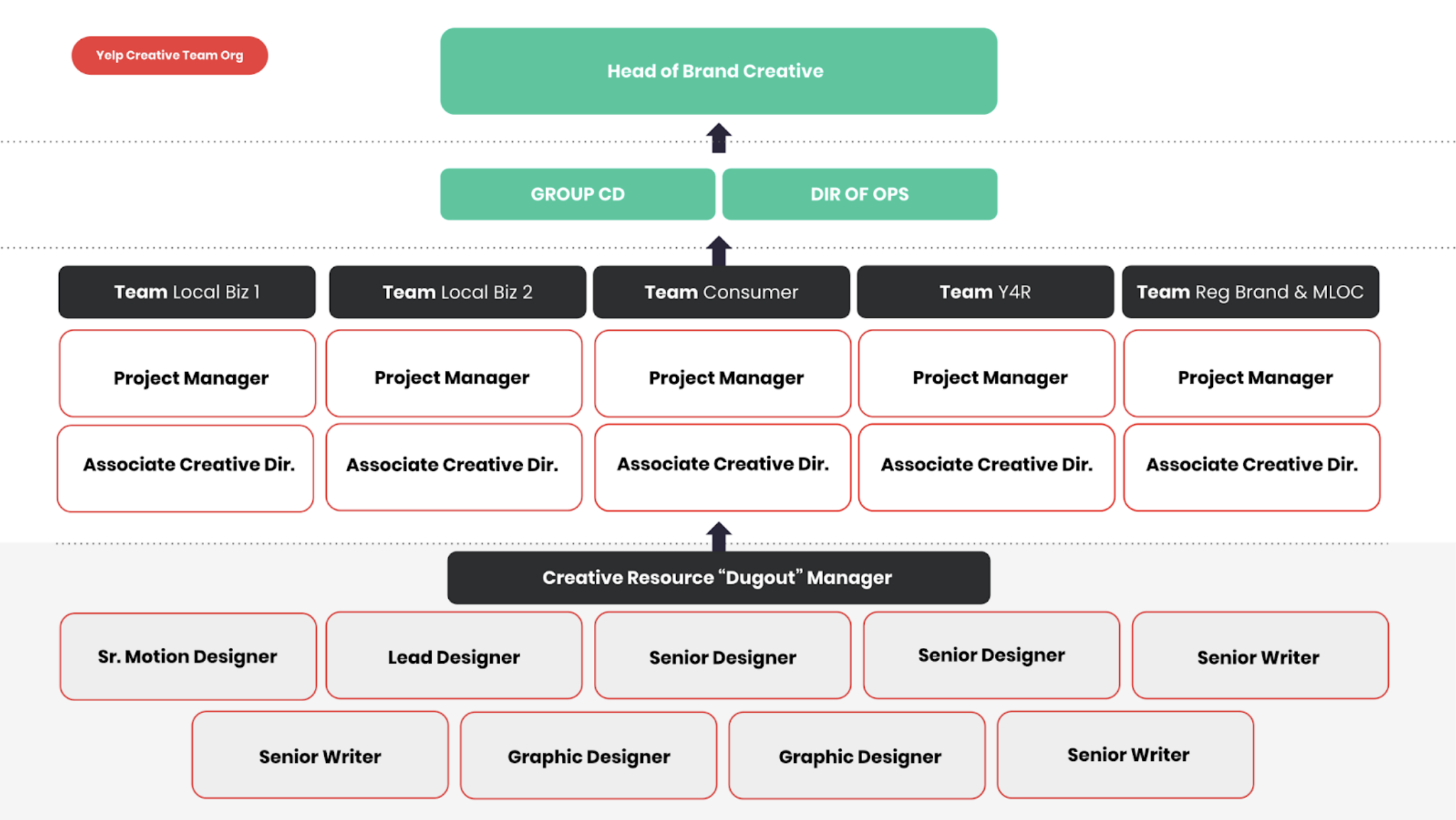
The team grew from 2 to 8 to 15 to 30 over three years. At every stage, the infrastructure scaled with the headcount rather than lagging behind it. That's the compounding effect of building the system first: the returns increase as the team grows rather than diminishing.
The Lesson That Travels
Every creative organization I've worked with since has had a version of the same problem. Not always at Yelp's scale, but the same shape: talented people working without the infrastructure that would make them collectively more effective than they are individually. The solution is almost always the same sequence. Map the friction first. Build the intake, the scheduling, the documentation, the feedback loops. Then scale the team into the system rather than building the system around a team that's already too large to change.
The glamorous version of this story is the campaigns — the ones that ended up in the New York Times, the Awwwards wins, the 30 million impressions. Those are what the system produced. But the system is the actual work.

Key Takeaways
What Made This Work
Systems > Bodies
Didn't just hire more people—built infrastructure that made each person 10x more effective.Creative as Partner, Not Service Org
Embedded early in planning cycles. Stakeholders trusted us to deliver.Measured Everything
Connected creative work to business results. This earned budget and headcount.You can't scale creative by just adding bodies. You scale by building systems, workflows, and measurement that let talented people do their best work consistently.
When I joined, Yelp's creative team was underwater. When I left this role, it was a well-oiled machine that stakeholders trusted—and that's what enabled the business to move faster.