An Agile Creativity Framework: How to Run Your Creative Team Like a Product Squad
Documentation- FROM THE WORK
Yelp: From 2 to 30 - Building a Creative Operating System at Scale
From The WorkIAC - One Lead, Three Brands: The Internal Agency Model
From The WorkAI as a Creative Co-Pilot: A Practical Guide
From The WorkThe System Nobody Used
From The WorkHow I Built an AI-Human Creative System (And What Actually Worked)
From The WorkLiving Like Kevin: How a 25-Year-Old Film Became a $500K Revenue Campaign
From The WorkWhy UX Writing is the Most Important Element of Narrative Design in Your Product
From The WorkWhy Internal Brand Strategy is Your Most Powerful Growth Engine
From The WorkWhy "Data-Driven" is Killing Your Creativity (And Why "Data-Informed" is the Solution)
From The WorkWhat the Level Design of Dark Souls Can Teach Us About Employee Onboarding
From The WorkWhat the Architectural Principles of Tadao Ando Can Teach Us About UX Design
From The WorkWhat is Creative Ops? A Practical Guide to Building a More Efficient Creative Workflow
From The WorkWhat is "Radical Empathy"? (And Why It's the Most Undervalued Asset in Business and Art)
From The WorkWhat Hiring Managers in Product and UX Really Want to See in a Creative's Portfolio
From The WorkUX Writing is More Than Microcopy—It's Narrative Design
From The WorkThe Storytelling Genius of Video Game "Lore": What Brands Can Learn from Elden Ring
From The WorkThe Rise of the Full-Stack Creative: Why Marketing Teams Need to Rethink Creative Roles
From The WorkThe Psychology of a Perfect Pitch: How to Frame Your Story to Speak Directly to the Primal Brain
From The WorkThe Perfect Creative Brief Template (And Why It Will Save Your Next Project)
From The WorkThe Manifesto of the Full-Stack Creative
From The WorkThe Full-Stack Triumph of Barbie: Narrative, Marketing, and Product
From The WorkThe Full-Stack Deconstruction of a Hit K-Pop Group: A Case Study in Narrative, Product, and Community
From The WorkThe Empathetic Leader's Playbook: How to Build Resilient and Innovative Teams
From The WorkThe Complete Brand Storytelling Framework: A Step-by-Step Guide
From The WorkThe Art of the Post-Mortem: A Creative Leader's Guide to Learning from Wins and Losses
From The WorkThe Anatomy of a Flop: A Full-Stack Post-Mortem of Quibi
From The WorkThe 7 Essential Tools for Creative Leaders: A Full-Stack Toolkit
From The WorkThe 30M Impression Campaign: How Storytelling and Earned Media Turned a Brand Activation into a Cultural Moment
From The WorkThe "Unreliable Narrator": A Deeply Creative Trope You Should Be Using in Your Brand Marketing
From The WorkThe "Second Brain" for a Full-Stack Creative: My System for Capturing, Connecting, and Creating Ideas
From The WorkThe "GTM" is Your Third Act: Applying Narrative Structure to Your Go-to-Market Plan
From The WorkThe "Creative Capital" Framework: How to Allocate Your Time and Energy Like a Venture Capitalist
From The WorkThe "Chief Narrative Officer": Why This Will Be the Most Important C-Suite Role in the Next Decade
From The WorkScaling Creative Operations at Yelp: The Systems That Made It Possible
From The WorkNarrative Marketing vs. Performance Marketing: Why Story-Driven Campaigns Win
From The WorkMoonbeam: 0 to Acquisition — Building a TikTok-Style Podcast App from Beta to Exit
From The WorkLeader's Guide to Managing Freelancers and Creative Agencies
From The WorkHow to Lead a High-Performing Remote Creative Team
From The WorkAvenues: The World School - Building a Global Brand System Across Two International Campuses
From The WorkHow to Build a Brand Voice from Scratch: A Startup Case Study
From The WorkHow to Apply Product Thinking to Your Creative Process
From The WorkHow We Used User Journey Design to Boost a Creator Platform’s Retention by 30%
From The WorkHow We Used Narrative to Increase Audience Reach by 40%: An IAC Case Study
From The WorkHow We Drove 30 Million Impressions for Yelp’s National “Servies” Campaign
From The WorkHow We Built a Creative Operating System to Increase Campaign Efficiency by 25% at Yelp
From The WorkHow We Aligned Creative and Product to Build a Better Content Pipeline at Yelp
From The WorkFirst Principles Thinking for Creatives: How to Deconstruct Any Story or Brand Problem to its Core
From The WorkDeconstructing Haiku: How the 5-7-5 Structure Can Revolutionize Your UX Microcopy
From The WorkCreative Strategy Isn't Just for Agencies—It's a Core Business Function
From The WorkAn Agile Creativity Framework: How to Run Your Creative Team Like a Product Squad
From The WorkAI as a "Creative Co-Pilot": A Practical Guide for Agencies and Studios
From The WorkA Leader's Guide to Managing Freelancers and Creative Agencies
From The WorkGTM Strategy Case Study: How We Launched a Startup MVP
From The Work5 Enduring Lessons from a Decade of Leading Brand Campaigns
From The WorkWorld-Building-as-a-Service: The Next Big Agency Model
From The Work
 BALANCE INMOTION FORA BETTER LIFEYelp: From 2 to 30 - Building a Creative Operating System at ScaleBALANCE INMOTION FORA BETTER LIFEIAC - One Lead, Three Brands: The Internal Agency ModelBALANCE INMOTION FORA BETTER LIFEAI as a Creative Co-Pilot: A Practical GuideBALANCE INMOTION FORA BETTER LIFEThe System Nobody UsedBALANCE INMOTION FORA BETTER LIFEHow I Built an AI-Human Creative System (And What Actually Worked)BALANCE INMOTION FORA BETTER LIFELiving Like Kevin: How a 25-Year-Old Film Became a $500K Revenue CampaignBALANCE INMOTION FORA BETTER LIFEWhy UX Writing is the Most Important Element of Narrative Design in Your ProductBALANCE INMOTION FORA BETTER LIFEWhy Internal Brand Strategy is Your Most Powerful Growth EngineBALANCE INMOTION FORA BETTER LIFEWhy "Data-Driven" is Killing Your Creativity (And Why "Data-Informed" is the Solution)BALANCE INMOTION FORA BETTER LIFEWhat the Level Design of Dark Souls Can Teach Us About Employee OnboardingBALANCE INMOTION FORA BETTER LIFEWhat the Architectural Principles of Tadao Ando Can Teach Us About UX DesignBALANCE INMOTION FORA BETTER LIFEWhat is Creative Ops? A Practical Guide to Building a More Efficient Creative WorkflowBALANCE INMOTION FORA BETTER LIFEWhat is "Radical Empathy"? (And Why It's the Most Undervalued Asset in Business and Art)BALANCE INMOTION FORA BETTER LIFEWhat Hiring Managers in Product and UX Really Want to See in a Creative's PortfolioBALANCE INMOTION FORA BETTER LIFEUX Writing is More Than Microcopy—It's Narrative DesignBALANCE INMOTION FORA BETTER LIFEThe Storytelling Genius of Video Game "Lore": What Brands Can Learn from Elden RingBALANCE INMOTION FORA BETTER LIFEThe Rise of the Full-Stack Creative: Why Marketing Teams Need to Rethink Creative RolesBALANCE INMOTION FORA BETTER LIFEThe Psychology of a Perfect Pitch: How to Frame Your Story to Speak Directly to the Primal BrainBALANCE INMOTION FORA BETTER LIFEThe Perfect Creative Brief Template (And Why It Will Save Your Next Project)BALANCE INMOTION FORA BETTER LIFEThe Manifesto of the Full-Stack CreativeBALANCE INMOTION FORA BETTER LIFEThe Full-Stack Triumph of Barbie: Narrative, Marketing, and ProductBALANCE INMOTION FORA BETTER LIFEThe Full-Stack Deconstruction of a Hit K-Pop Group: A Case Study in Narrative, Product, and CommunityBALANCE INMOTION FORA BETTER LIFEThe Empathetic Leader's Playbook: How to Build Resilient and Innovative TeamsBALANCE INMOTION FORA BETTER LIFEThe Complete Brand Storytelling Framework: A Step-by-Step GuideBALANCE INMOTION FORA BETTER LIFEThe Art of the Post-Mortem: A Creative Leader's Guide to Learning from Wins and LossesBALANCE INMOTION FORA BETTER LIFEThe Anatomy of a Flop: A Full-Stack Post-Mortem of QuibiBALANCE INMOTION FORA BETTER LIFEThe 7 Essential Tools for Creative Leaders: A Full-Stack ToolkitBALANCE INMOTION FORA BETTER LIFEThe 30M Impression Campaign: How Storytelling and Earned Media Turned a Brand Activation into a Cultural MomentBALANCE INMOTION FORA BETTER LIFEThe "Unreliable Narrator": A Deeply Creative Trope You Should Be Using in Your Brand MarketingBALANCE INMOTION FORA BETTER LIFEThe "Second Brain" for a Full-Stack Creative: My System for Capturing, Connecting, and Creating IdeasBALANCE INMOTION FORA BETTER LIFEThe "GTM" is Your Third Act: Applying Narrative Structure to Your Go-to-Market PlanBALANCE INMOTION FORA BETTER LIFEThe "Creative Capital" Framework: How to Allocate Your Time and Energy Like a Venture CapitalistBALANCE INMOTION FORA BETTER LIFEThe "Chief Narrative Officer": Why This Will Be the Most Important C-Suite Role in the Next DecadeBALANCE INMOTION FORA BETTER LIFEScaling Creative Operations at Yelp: The Systems That Made It PossibleBALANCE INMOTION FORA BETTER LIFENarrative Marketing vs. Performance Marketing: Why Story-Driven Campaigns WinBALANCE INMOTION FORA BETTER LIFEMoonbeam: 0 to Acquisition — Building a TikTok-Style Podcast App from Beta to ExitBALANCE INMOTION FORA BETTER LIFELeader's Guide to Managing Freelancers and Creative AgenciesBALANCE INMOTION FORA BETTER LIFEHow to Lead a High-Performing Remote Creative TeamBALANCE INMOTION FORA BETTER LIFEAvenues: The World School - Building a Global Brand System Across Two International CampusesBALANCE INMOTION FORA BETTER LIFEHow to Build a Brand Voice from Scratch: A Startup Case StudyBALANCE INMOTION FORA BETTER LIFEHow to Apply Product Thinking to Your Creative ProcessBALANCE INMOTION FORA BETTER LIFEHow We Used User Journey Design to Boost a Creator Platform’s Retention by 30%BALANCE INMOTION FORA BETTER LIFEHow We Used Narrative to Increase Audience Reach by 40%: An IAC Case StudyBALANCE INMOTION FORA BETTER LIFEHow We Drove 30 Million Impressions for Yelp’s National “Servies” CampaignBALANCE INMOTION FORA BETTER LIFEHow We Built a Creative Operating System to Increase Campaign Efficiency by 25% at YelpBALANCE INMOTION FORA BETTER LIFEHow We Aligned Creative and Product to Build a Better Content Pipeline at YelpBALANCE INMOTION FORA BETTER LIFEFirst Principles Thinking for Creatives: How to Deconstruct Any Story or Brand Problem to its CoreBALANCE INMOTION FORA BETTER LIFEDeconstructing Haiku: How the 5-7-5 Structure Can Revolutionize Your UX MicrocopyBALANCE INMOTION FORA BETTER LIFECreative Strategy Isn't Just for Agencies—It's a Core Business FunctionBALANCE INMOTION FORA BETTER LIFEAn Agile Creativity Framework: How to Run Your Creative Team Like a Product SquadBALANCE INMOTION FORA BETTER LIFEAI as a "Creative Co-Pilot": A Practical Guide for Agencies and StudiosBALANCE INMOTION FORA BETTER LIFEA Leader's Guide to Managing Freelancers and Creative AgenciesBALANCE INMOTION FORA BETTER LIFEGTM Strategy Case Study: How We Launched a Startup MVPBALANCE INMOTION FORA BETTER LIFE5 Enduring Lessons from a Decade of Leading Brand CampaignsBALANCE INMOTION FORA BETTER LIFEWorld-Building-as-a-Service: The Next Big Agency ModelPOINT OF VIEW
- Framework
In most tech companies, the product team and the creative team operate with completely incompatible rhythms. Product runs on two-week sprints with daily standups, shared backlogs, and documented retrospectives. Creative runs on briefs, black-box production periods, and the occasional big reveal that either lands or requires three rounds of revision nobody budgeted for.
Both teams are usually good at what they do. The friction isn't about capability — it's about operating systems. Product has built a repeatable process that creates predictability and trust with stakeholders. Creative hasn't. So when the two have to work together, someone always ends up waiting, confused, or frustrated. Usually it's the stakeholder watching a deadline pass.
I've run creative teams inside tech organizations for most of my career. The ones that earned genuine trust from product and engineering partners — and got the budgets and scope to show for it — all had one thing in common: they borrowed the operating infrastructure of a product team and adapted it for creative work. Not all of it. Just the parts that solve the right problems.
Here's what that actually looks like.
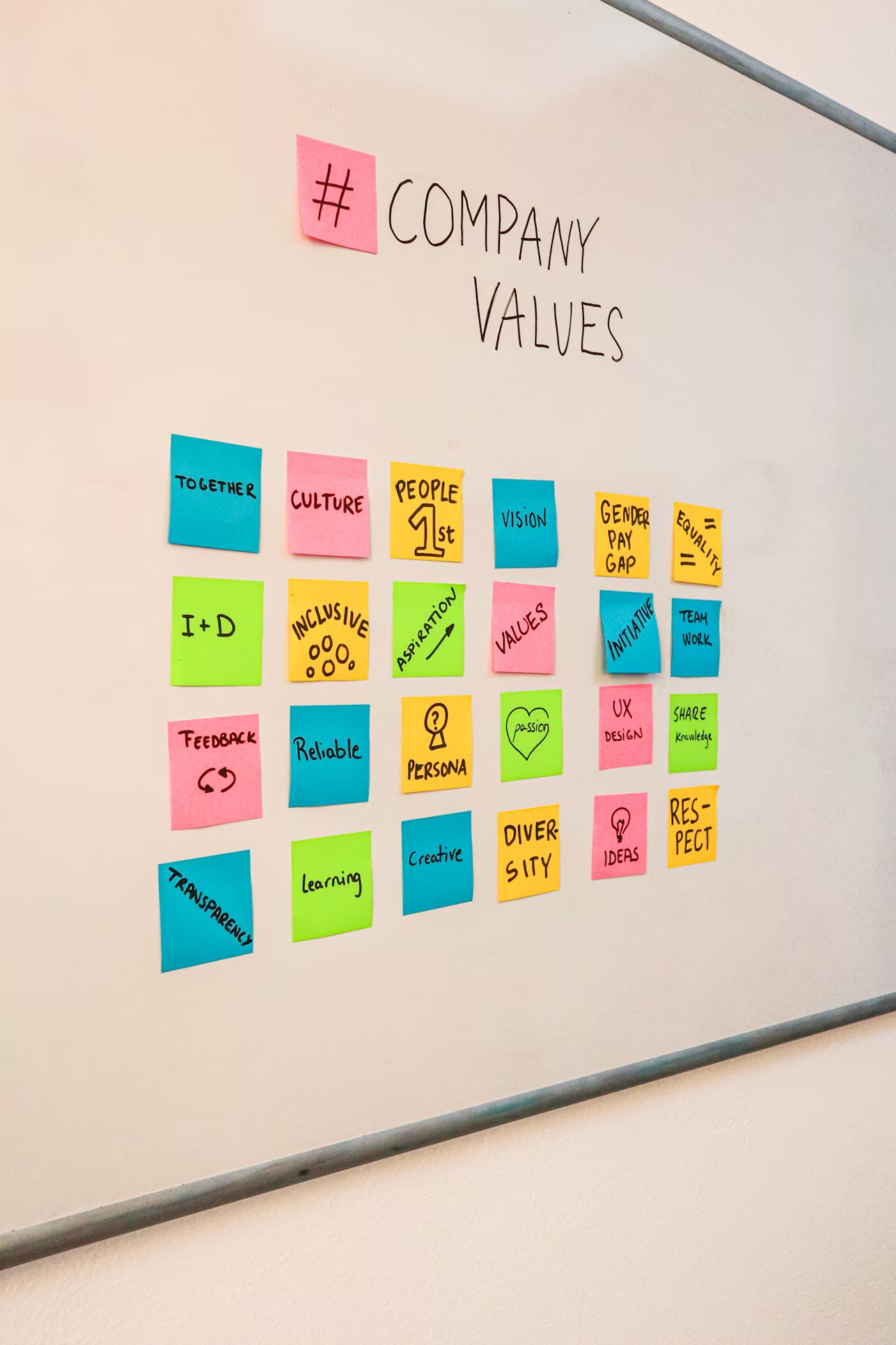
When you run your creative team like a product squad, you don't kill the magic; you just build a better, faster delivery system for it.
The Problem
Why the Traditional Agency Model is Failing Inside Tech
The "old world" creative model is a waterfall. A stakeholder throws a brief over the wall, the creative team goes into their cave for three weeks, and they emerge with a "Big Bang" reveal, hoping they nailed it. This process is slow, arrogant, and fundamentally incompatible with how modern tech companies work.
Product teams work in two-week sprints. They deploy code multiple times a day. They live and die by user feedback. They cannot and will not wait three weeks for a "big reveal," only to find the creative is completely misaligned with the user data they just collected.
To be a successful partner, creative must learn to speak the same language and operate at the same tempo.

The Agile Creativity Playbook
4 Steps to Systematize Your Spark
This framework steals the best ideas from product management (Agile, Scrum) and repurposes them for the creative process.
1. Trade Your Project List for a "Creative Backlog"
Product teams don’t have a random list of "stuff to do." They have a prioritized backlog. Your creative team should be no different.
- The How-To: Stop accepting requests via Slack and email immediately. All requests must go through your "Single Front Door" (your Strategic Brief, as I've covered in another post). These briefs don't go onto a creative's calendar; they go into a single "Backlog" column in your project hub (Asana, Trello, Notion).
- Why It Works: This is a crucial psychological shift. A "backlog" is a list of potential work. An "active project" is a commitment. This gives the Creative Lead the power to review, prioritize, and resource projects strategically, rather than just reacting to the nearest fire.
2. Run Creative "Sprints," Not Endless Projects
The biggest drain on a creative team is the "never-ending project" that just drags on for months. Product teams solved this with sprints—short, fixed blocks of time (usually one or two weeks) dedicated to a specific, shippable outcome.
- The How-To: Structure your team's work in two-week creative sprints.
- Sprint Planning: On Monday morning, the Creative Lead meets with key stakeholders (like a Product Manager) to review the top-priority items in the backlog. Together, they agree on what can realistically be accomplished in the next two weeks. This becomes the "Sprint Commitment."
- The Sprint: For the next two weeks, the team's only focus is on that committed work. New, "urgent" requests that come in don't interrupt the sprint; they go straight into the backlog to be prioritized for the next sprint.
- Sprint Review: At the end of the sprint, the team presents their "shippable" work (the first draft of the ad campaign, the new landing page design) to the stakeholders.
- Why It Works: This creates a predictable rhythm. It protects your team from constant, disruptive context-switching. It forces stakeholders to be more thoughtful and to plan ahead. And it creates a powerful, recurring sense of accomplishment for the team as they "ship" work every two weeks.

3. Implement Daily "Stand-Ups" and a Culture of Transparency
One of the biggest fears stakeholders have about creative teams is a lack of visibility. They give a brief, and then... silence. Agile teams solve this with a daily "stand-up."
- The How-To: You don't need a physical meeting. The best stand-ups are asynchronous. Create a dedicated Slack channel (#creative-standup). Every morning, each member of the creative team answers three simple questions:
- What did I accomplish yesterday?
- What is my main focus today?
- Are there any blockers preventing me from moving forward?
- Why It Works: This 5-minute ritual provides 100% daily visibility to the entire team and all stakeholders. It's not for micromanaging. It's a powerful tool for self-accountability and, most importantly, for identifying and solving "blockers" in real-time. If a designer is stuck because they're waiting on copy, the whole team sees it, and the problem can be solved in minutes, not days.
4. Run "Creative Retrospectives" to Learn and Iterate
Product teams are relentless about improvement. After every sprint, they hold a "retrospective" to analyze what went well, what went wrong, and what they can do better next time. Creative teams should do the same.
- The How-To: After a major project ships, schedule a 45-minute "Creative Retrospective." This is a blameless post-mortem. Using a digital whiteboard tool like Miro, the team collectively answers three questions:
- What Worked? (What parts of our process felt smooth and efficient?)
- What Was Clunky? (Where did we get stuck? Where was there friction?)
- What Will We Try Next Time? (What is one concrete process improvement we can experiment with in our next sprint?)
- Why It Works: This creates a culture of continuous improvement. It proves that you are a team that learns and evolves. It turns every project—even the ones that were a struggle—into a valuable data point. This is the single most powerful ritual for transforming a good creative team into a great one.

The Result
A Team that is Both Creative AND Credible
When you start running your creative team like a product squad, you don't lose your creative edge. You gain a powerful new one: Credibility.
You are no longer the "department of magic and feelings." You are a predictable, transparent, and high-performing strategic partner. Your stakeholders stop seeing you as a mysterious black box and start seeing you as a reliable engine for growth.
- Your team's morale improves because they are protected from chaos and empowered to do their best work.
- The quality of your work improves because you are constantly learning and iterating on your process.
- Your influence in the organization grows because you can now speak the language of your product and engineering counterparts and demonstrate your value in terms they understand and respect.
Adopting an agile creativity framework is the most effective way to bridge the cultural divide between the creative and technical worlds. It's how you build a team that doesn't just produce beautiful, inspiring work, but does so with the rigor, speed, and strategic alignment that modern businesses demand.